
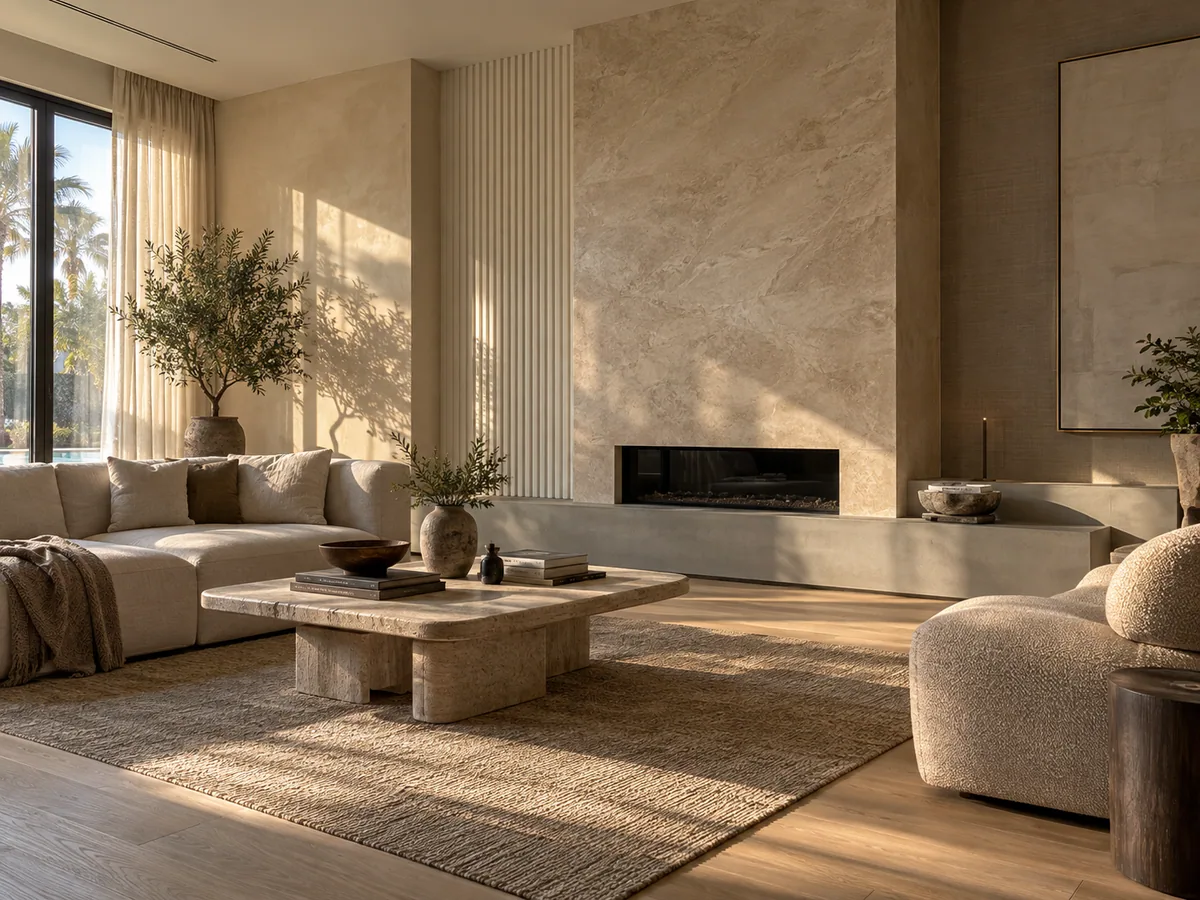
A Venetian plaster board can look almost flat in a showroom, then show strong trowel movement beside a window. Check it in the intended room, under daylight and the lights that will be on after dark.
Set the wall and light before judging the sheen
Mark where the wall faces, where ceiling lights will sit and what furniture stands nearby. A polished area may look calm in diffuse daylight and much more active under a grazing spotlight. Decide which view you want the room to have.
Test the board from the room entrance, the normal seated position and close range. These are different views. A feature wall behind a dining table is usually read from several metres away; a wall beside a hallway gets examined at arm's length every day.
Decide how much hand movement belongs on the wall
Ask the applicator for two boards: one with restrained trowel movement and one where the strokes are more visible. Compare them in place, then record the chosen colour, sheen and variation on the sign-off sheet.
Keep the physical board with the finish schedule. Photographs are useful for the wider team, but exposure can make a mineral wall look flatter or more contrasted than it does in person.
Check the surface before the finish is booked
Venetian plaster needs a sound, prepared wall. Mark patch repairs, hairline cracking, old coatings, wall-mounted items and junctions with joinery or metal trims during the assessment. A polished finish can make a poorly prepared background easier to see, particularly under side light.
What to check on the wall
DecoPaint applies Venetian plaster as a hand-trowelled lime finish. The light, sample and application method are part of one approval. For a larger room, it can be useful to approve a controlled wall area before the finish continues around returns or adjacent surfaces.
Take the lighting plan and nearby finish samples to a sample review. Approve the board on the intended wall, then keep it for the applicator's reference.