
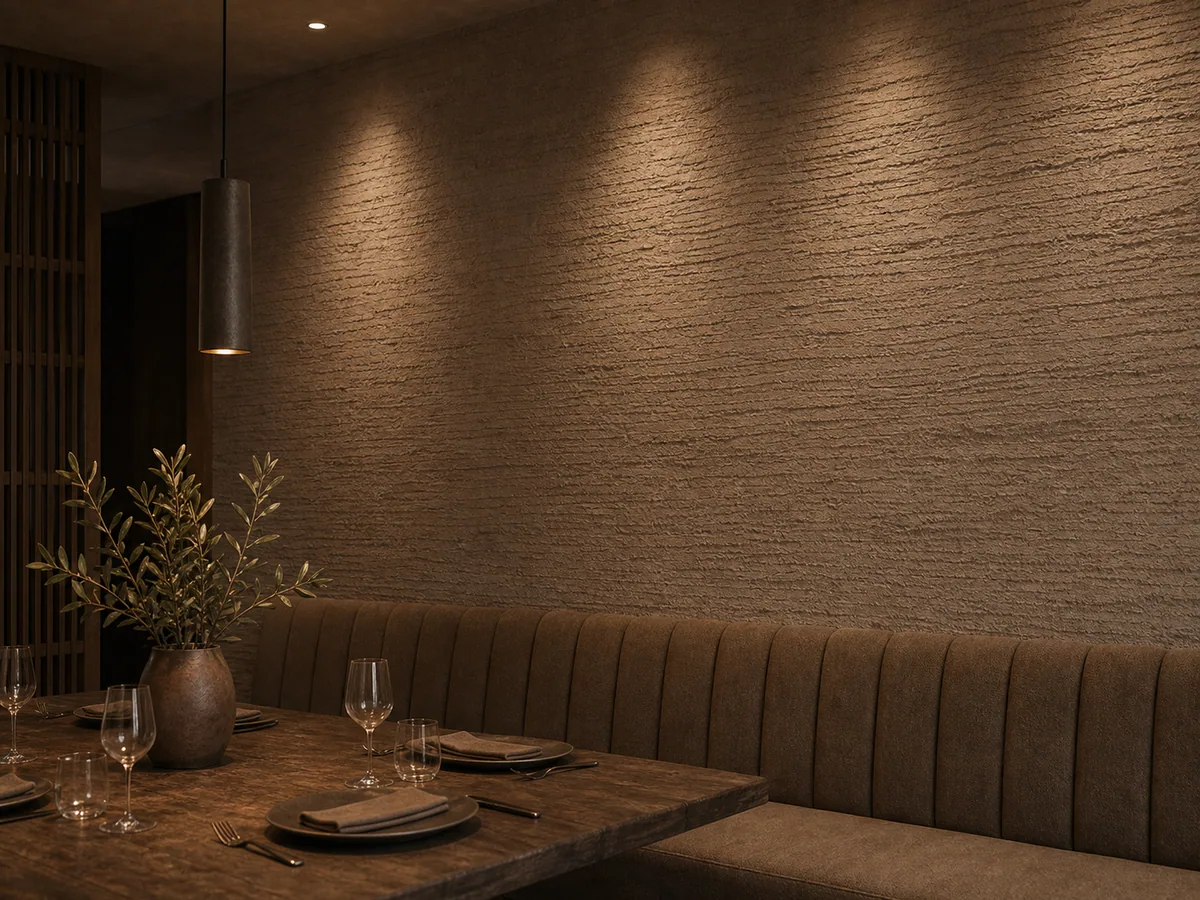
Before approving clay plaster for a commercial interior, find out how the wall will be used and cleaned. Get the preparation requirements and supporting technical documents for the proposed finish, then keep those answers with the finish reference. The applicator and facilities team both need them.
DecoPaint describes its clay-based plaster as a clay-rich decorative finish with a matte appearance and subtle movement. Whether it suits your project needs a closer look at the wall itself. Consider a reception backdrop separately from a busy circulation route.
Where will people touch the wall?
Mark the proposed areas on an elevation and describe what happens beside them. Show where chairs touch the surface or staff move equipment. Note nearby food service and washbasins, along with places that need frequent cleaning, so the applicator can assess the exposure.
Go through that drawing with the operator. A wall behind fixed seating may get little everyday contact, but someone will still need access when the seating moves. Discuss events and changes of layout as well as an ordinary working day.
If the selected system does not support the intended use, review another finish or change the wall detail before signing off the specification. Mark the revised choice by location on the drawings.
How will the cleaning team look after it?
Give the applicator the actual cleaning routine, including the products and equipment the team plans to use. Request written care guidance for the proposed finish. It should explain what to do about a spill or scuff and when to call a specialist.
A proposed protective treatment needs its own review. Get the supplier’s confirmation of compatibility and an explanation of how it affects appearance and care. Include it on the approval sample so everyone reviews the finish that is being proposed.
Where the operator follows a fixed cleaning regime, let the facilities team review the care instructions before selection. Agree who keeps those instructions and how they will reach a replacement cleaning contractor. A general promise to be careful leaves too much unanswered.
What evidence comes with the proposed product?
Request the product identification and current application information, covering preparation and any protective treatment. The project’s responsible designer or consultant should identify the performance evidence needed for the location.
For a useful example of document types, Clayworks’ product information library lists finish data sheets separately from fire certificates and VOC emissions reports. Ask for the equivalent information relevant to the system proposed for your site. This reference does not identify DecoPaint’s supplier or establish that a Clayworks result applies to your project.
The responsible reviewer needs to check that the evidence covers the product and its intended use. Keep unanswered technical requirements open in the submittal register. Describing a material as natural or mineral does not establish a particular test result.
Is the wall ready for the applicator?
Have the applicator inspect the substrate and identify the preparation required. Put that work alongside the decorative finish scope, then identify any repairs or substrate work belonging to another trade. Agree how the applicator will review and accept the prepared wall.
Show the edges at door frames and joinery, including access panels. Name who installs those details and when. Wall-mounted signs and equipment also need their fixing arrangements resolved before the decorative work begins.
If a sign later needs to move, discuss the affected finish and repair approach before anyone cuts into the completed wall. Keep that discussion with the instruction to relocate it.
What will you use as the approval reference?
Review a representative sample under the intended lighting. Include the agreed edge or adjoining material where that helps the decision. Record the accepted colour and texture, the sample reference and any treatment.
Talk through how the sample will be used to assess the larger wall, including the variation expected from hand application. At the same review, settle who will assess future damage, what information they will need and how a repair will be judged. Keep the finish identification and approved care guidance in the facilities team’s handover file.
Bring the wall elevations and the operator’s cleaning requirements to a DecoPaint sample review. Mark the areas with frequent contact and include any technical submittal requirements already issued by the consultant. That gives the applicator the information needed to discuss the clay finish for its intended use.