
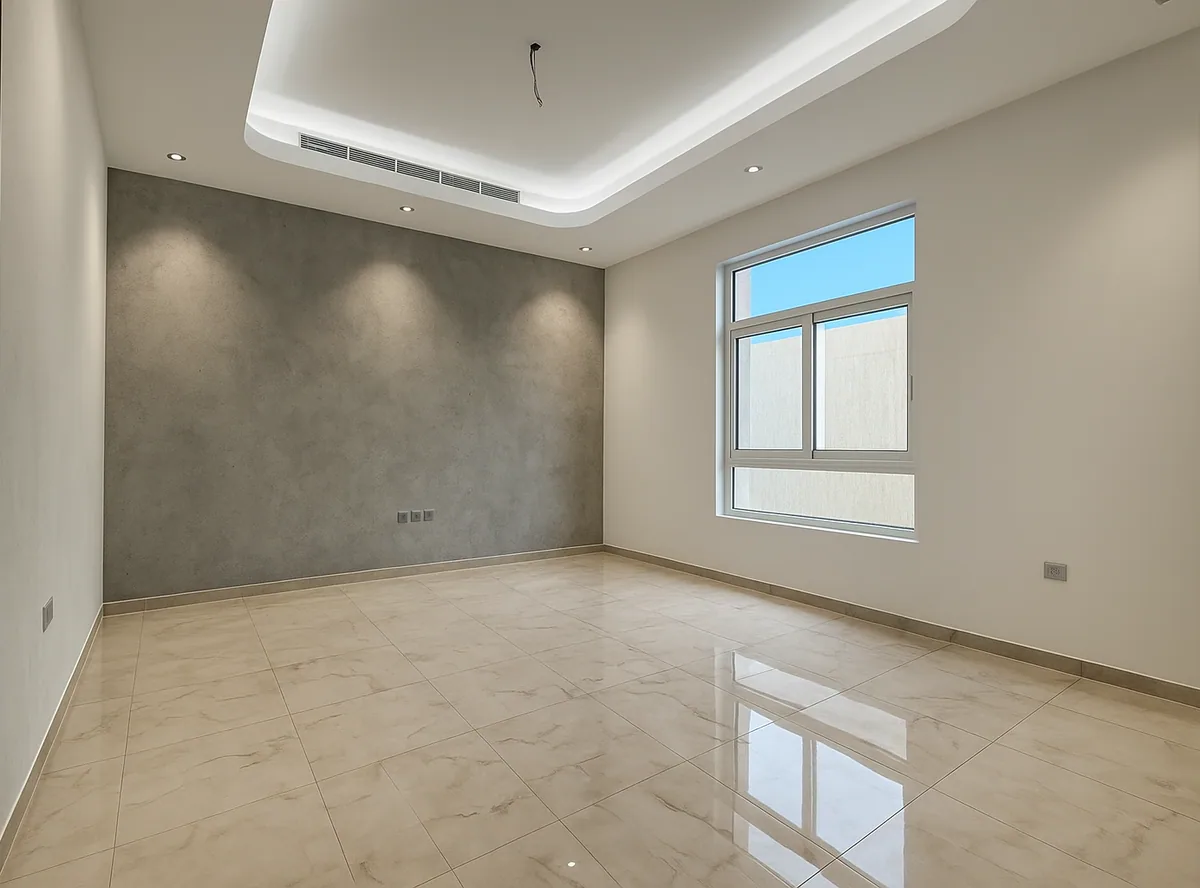
Accept a concrete texture wall sample only when you can identify the version you want installed and describe what you have agreed. Review its colour and texture under the room’s intended lighting, include the relevant edges, and keep the physical reference for the applicator. Leave unresolved choices marked as open.
DecoPaint’s concrete texture finish includes board-formed and raked appearances, with matte to low-satin sheen options. At the sample review, turn those descriptions into a reference for your particular wall.
Bring the wall information to the review
Mark the area on a wall elevation, including returns, niches and places where the finish stops. Add the lighting positions and identify nearby joinery or trims. A board can help you choose the surface; the drawing shows where that choice has to be built.
Hold the sample upright near the intended wall where possible. Look at it from the entrance and from the usual seated or standing positions. Try the lighting that will remain in the room, including fittings aimed along the surface. If the lighting is undecided, record that limitation and agree whether another review will be needed.
Bring the adjoining material samples too. Compare the concrete texture beside the selected timber or stone so you can judge the relationship directly.
Work through the acceptance sheet
Use this checklist during the review and add comments against the sample reference. It is an appearance checklist; technical suitability and wall preparation still need their own assessment.
| Check | What to agree before acceptance |
|---|---|
| Sample identity | Reference, version and the wall areas it applies to |
| Colour | The accepted tone beside the adjoining materials |
| Texture direction | The orientation of board lines, raking or other agreed movement |
| Surface character | The amount of texture and variation represented by the sample |
| Sheen | The intended reflection under the room lighting |
| Edges and returns | Where the finish stops and which junction details still need review |
| Viewing conditions | Where the sample was reviewed and any lighting decisions still open |
| Decision | Accepted, revise and resubmit, or awaiting a named outstanding item |
For texture direction, mark the intended orientation on the elevation as well as on the sample record. Include any change of direction around a return. That gives the applicator a decision to follow when moving from the board to the wall.
Discuss the variation the sample represents. Ask whether the proposed reference is large enough to judge the intended surface and whether a trial area would help. Agree the scope and review point for any trial before the team continues onto the remaining wall.
Include the finish that will actually be installed
If the selected system includes a sealer or other treatment, review the completed sample with that treatment. Have the applicator explain the proposed system and its care requirements. Note which version was assessed so the team does not return to an earlier untreated reference by mistake.
Keep the sample decision separate from acceptance of the receiving wall. The applicator needs to assess the substrate and identify the required preparation. Assign repairs and adjoining work clearly, including work belonging to another trade, before application begins.
At door frames or joinery, show the stopping detail and agree who provides it. If that detail is still unresolved, leave it open on the sheet even if the colour and texture have been accepted.
Keep the reference available after sign-off
Label the accepted physical sample and retain it with the project’s finish information. Photographs can accompany the record, with the location and lighting noted, so the wider team can follow the decision. Use the agreed physical reference for later comparisons.
When a revision is requested, identify what needs to change. Compare the replacement with the comments, then mark which version supersedes the earlier one. Confirm who can accept it on the project’s behalf.
For a DecoPaint sample review, bring the marked elevation and the adjoining material references. Include the acceptance sheet with its open questions. The applicator can use those comments to develop a sample for the wall you intend to finish.