
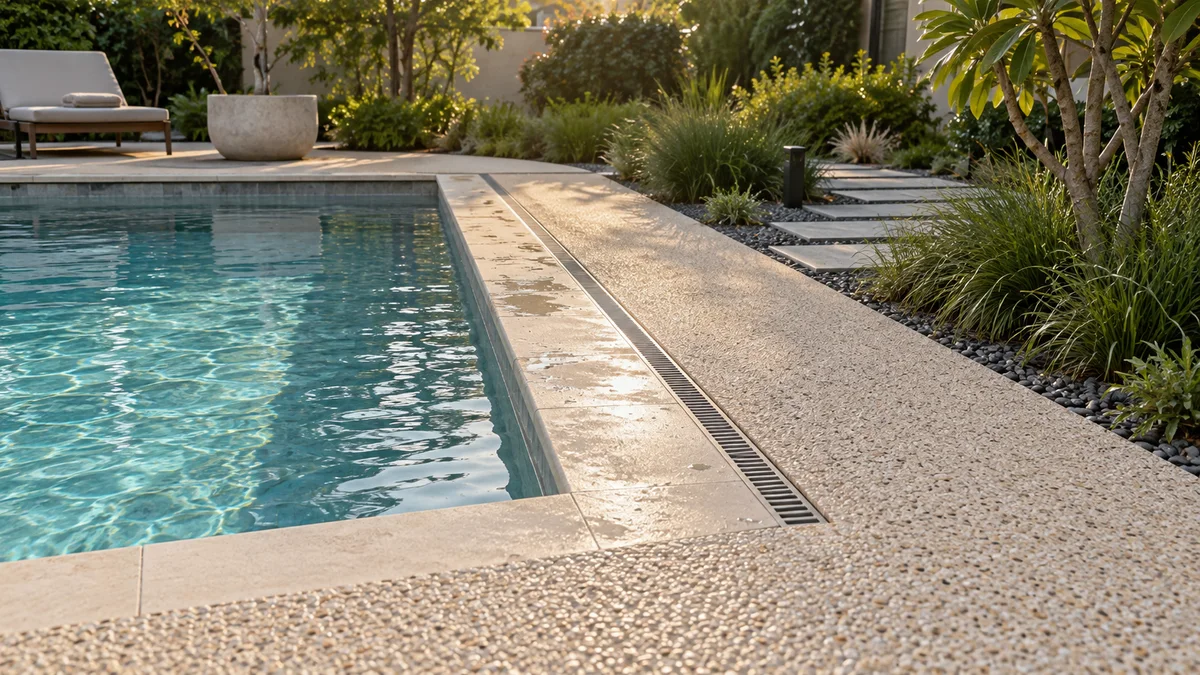
Epoxy flooring can be used around some pools when the proposed system is documented for the exposure and given a suitable wet-grip texture. The word "epoxy" alone is not enough. A Dubai pool surround also has to manage drainage, strong sun, cleaning chemicals, bare feet and awkward junctions with coping, planting and garden paths.
Survey the whole route around the water before choosing the surface. That survey may confirm a textured epoxy system, or it may point to resin-bound aggregate, terrazzo or another outdoor finish.
Draw water movement first
Dubai Municipality's current technical guidelines for swimming pool plans require drawings to show the deck area, surface slope and water-drainage scheme. Those items should also lead the finish discussion.
Mark where water comes from and where it goes:
- splash and overflow at the coping;
- outdoor showers and foot showers;
- linear drains and floor traps;
- garden irrigation crossing the surround;
- rainwater paths from terraces or roofs;
- low points beside planters, walls and steps.
A seamless appearance cannot compensate for standing water. Confirm the falls before the surface is installed and retain access to drains for cleaning.
Treat wet grip as a project requirement
Ask for wet-condition slip data for the complete proposed system, including its final top coat or aggregate texture. A generic product label or a dry showroom sample does not describe how the installed pool route will behave.
Map the highest-risk movements: the first steps out of the water, the route to showers, stairs, shallow ramps and places where children change direction. Texture may need to vary by zone, but changes should be drawn so they do not look like site improvisation.
The finish also needs to remain comfortable enough for bare feet. Colour and texture affect how the surface feels and how easily it can be cleaned, so review a sample outdoors at the project rather than approving it under indoor lighting.
Compare systems by what they do
| Surface direction | Where it may fit | Evidence to request |
|---|---|---|
| Textured decorative epoxy | A sound prepared base where a continuous pigmented finish is wanted | Outdoor and UV suitability, wet slip result, chemical resistance, substrate limits and top-coat maintenance |
| Resin-bound aggregate | Paths, terraces and pool surrounds where a natural stone texture and permeability suit the drainage design | Aggregate and resin specification, permeability build-up, edge restraint, base requirements and maintenance method |
| Terrazzo | Designed pool decks or hospitality areas where an aggregate floor and controlled layout are required | Binder suitability, divider and joint plan, wet finish, sealer, structural build-up and repair strategy |
| Microcement or another cementitious finish | Selected continuous details where the specific system is approved for exterior wet exposure | Full system data, substrate movement detail, wet grip, sealer and weathering guidance |
DecoPaint's resin-bound finish uses aggregate bound in UV-stable polyurethane resin and is described for pool surrounds, terraces and pedestrian paths. Its permeability can be useful, but only when the base and drainage design let the complete build-up work.
DecoPaint also lists pool decks with anti-slip treatment for decorative epoxy. For any exposed location, request the exact system data. Indoor epoxy performance should never be assumed to transfer outdoors.
Inspect the base and every edge
Pool surrounds contain more junctions than the finished photographs suggest. Coping, drains, planters, inspection covers, steps, walls and soft landscaping all interrupt the field.
Sika's resin-floor preparation guide calls for a sound, clean substrate with suitable profile, slope and moisture condition. Apply that discipline to the whole surround. Record cracks, movement joints, hollow areas and previous waterproofing or coatings.
At planting beds, define the edge restraint and keep irrigation or soil from migrating into the finish. At inspection covers, agree whether the surface continues across a recessed lid or stops at a visible frame. At the pool edge, coordinate the finish thickness with the coping and overflow detail.
Plan for sun, chemicals and cleaning
Ask how the system responds to direct sun, pool treatment chemicals, sunscreen residue and the cleaning products the maintenance team uses. The answer should come from the selected system documentation, not from a broad claim about a material family.
Set the cleaning method before choosing a very fine or very coarse texture. A heavily textured surface may improve grip while holding more dirt. A smoother surface may be easier to wash while needing a different approach to wet slip. The project team has to balance both with tested information and an actual sample.
September remains a sensible time to review an outdoor sample because it can be seen under strong local sun. Do not use one hot afternoon as a performance test. Use it to judge glare, colour, texture and barefoot feel, then rely on product data and project-specific detailing for the technical decision.
DecoPaint applicator note
Bring the pool plan and landscape plan to the same meeting. DecoPaint needs to see drains, irrigation, edging, coping, steps and the proposed base before recommending a finish. A close-up reference image of aggregate colour does not show any of those conditions.
Ask for a marked-up perimeter drawing. It should name the surface system in each zone and show where it stops at stone, planting, doors and service covers.
Pool-surround briefing checklist
Prepare the approved pool drawing, landscape plan, drainage layout, current substrate information, wet routes, cleaning method and any operator or authority requirements. Add photographs of the base and close-ups of every edge condition.
Then compare an outdoor sample of resin-bound aggregate, textured decorative epoxy or terrazzo at the site. The surface decision should follow the water, not fight it.