
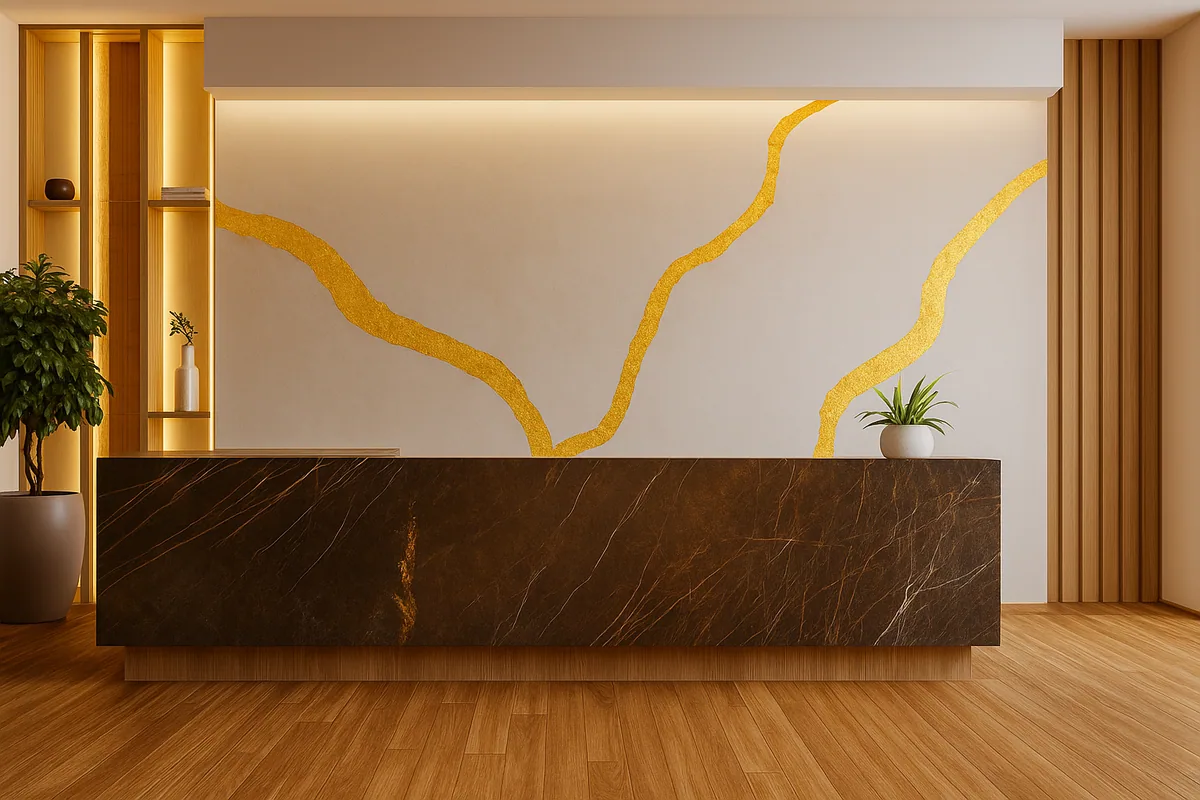
Specify the actual leaf material before approving its colour. A description such as gold effect leaves the composition undecided. Ask for the product identity and metal content, then review the complete proposed finish, including its adhesive system and any protective treatment, on a physical sample.
DecoPaint’s gold and silver leaf service is presented as real metal leaf work. If an imitation alternative is proposed for your interior, identify it separately and confirm whether it forms part of the applicator’s offered scope. A similar colour does not establish the same material specification.
Write the material name into the finish schedule
For genuine gold leaf, request the stated purity and product reference from the supplier. For other genuine metals, identify the metal and the product being offered. Keep those details beside the accepted sample reference.
For imitation leaf, ask what the product is made from. Gilding supplier SeppLeaf’s material guidance distinguishes composition leaf from genuine gold and describes imitation gold as usually a copper-zinc alloy. Its guidance also notes that copper-alloy leaf can tarnish and needs compatible protection.
Use that distinction to frame the specification review. It does not identify DecoPaint’s supplier or establish the system for your project. Request the technical information for the actual products proposed and have the responsible designer and applicator review their suitability together.
Describe where the leaf will be used
Mark the intended areas on the room elevation. Include the substrate and the edges where the finish meets joinery or another material. Identify whether people will touch the surface and explain the intended cleaning arrangement.
A ceiling feature and a frequently handled panel need separate consideration. Give the applicator those conditions before asking them to confirm the proposed system. Where specialist performance evidence is required by the project, identify it in the submittal request.
Keep application method and material identity as separate decisions. Naming a gilding technique does not tell the team which metal to order. The finish schedule should connect the chosen leaf to the approved system and location.
Approve a complete reference
Ask for a sample that represents the proposed preparation, leaf and final treatment. Review its colour and reflection under the intended room lighting. Include any agreed patina or distressed appearance so the sample shows the finish the team is being asked to reproduce.
Use a short schedule like this to keep the decision specific:
| Specification item | What to record |
|---|---|
| Leaf identity | Genuine metal or imitation composition, with product reference |
| Supplier information | Stated purity or composition where applicable |
| Location and background | Wall, panel or other defined area and receiving substrate |
| Proposed system | Preparation, adhesive or size, and any protective treatment |
| Appearance | Accepted sample, sheen and intended variation |
| Care | Instructions for the installed system and contact for repairs |
Discuss which visible characteristics the sample represents, including overlaps or deliberate ageing where those are part of the design. If the surface is extensive, agree whether a larger trial is needed and what it will resolve. Retain the physical reference with its acceptance record.
Review protection and maintenance together
Have the supplier and applicator explain the protective treatment proposed for the selected leaf. Confirm compatibility across the system and include that treatment in the appearance review. Avoid applying a care rule for one metal or product to every leaf finish.
Give the operator or owner the care instructions before final acceptance. Ask how damage should be assessed and who should carry out repairs. Keep the product identification and accepted finish reference in the handover information so a future maintenance team can identify what was installed.
If a substitution is suggested after approval, review the material identity and complete sample again. Record what is changing and who accepts it before the affected work proceeds. Update the finish schedule so the original and replacement cannot be confused.
Bring the marked elevations and the proposed leaf references to a DecoPaint sample review. State whether genuine metal is a requirement of the project. That gives the team a clear basis for discussing the finish and confirming the scope it can provide.