
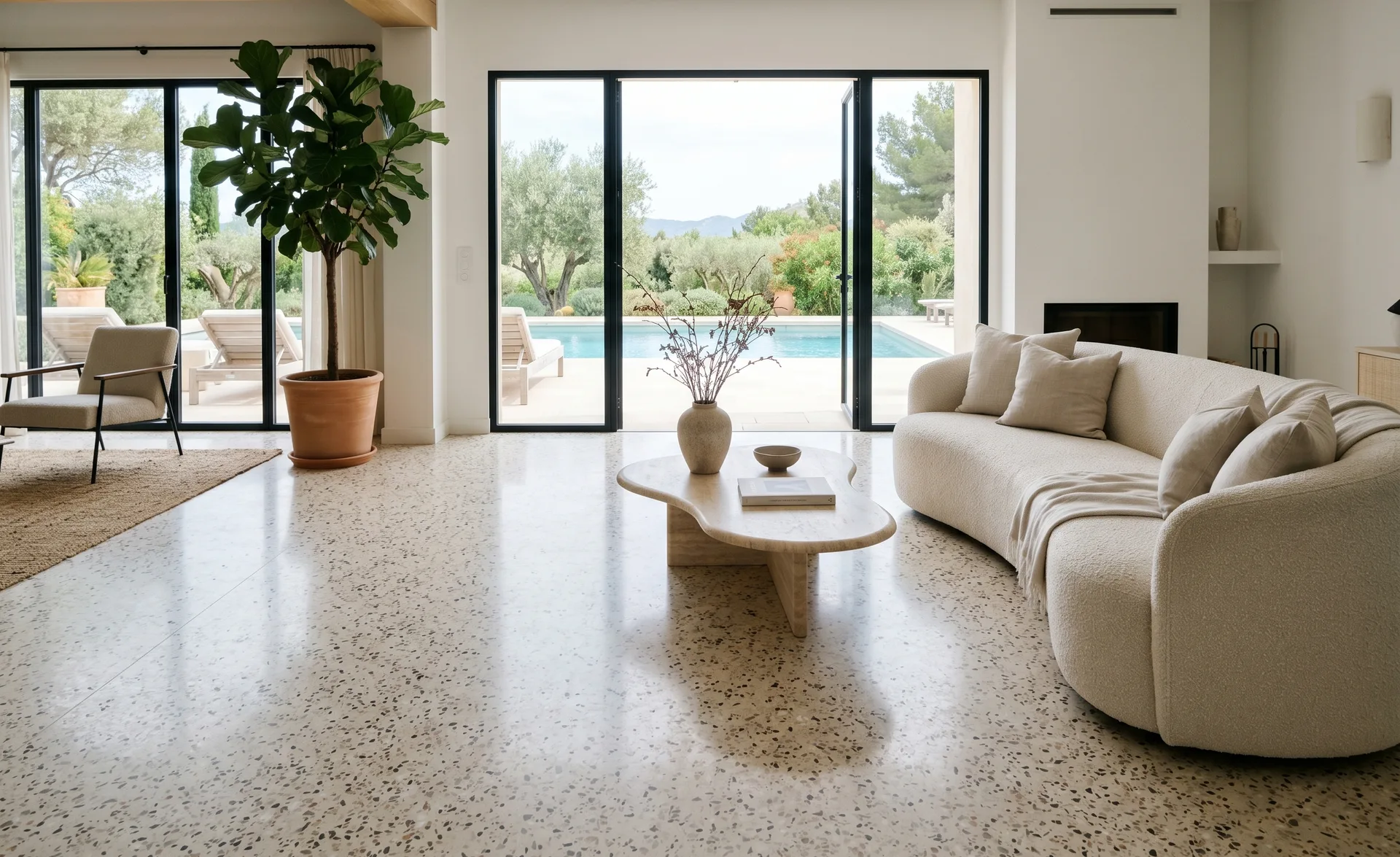
The terrazzo sample you notice first is not always the one you want across an entire floor. A handful of dark chips can look lively on a small board. Repeated through an open living room, that contrast becomes a much larger part of the interior.
When choosing terrazzo flooring in Dubai, start with how much attention the floor should draw. Then work through the chip mix and background colour together. DecoPaint offers custom aggregate mixes, so the selection can respond to the furniture and joinery already planned for the room.
Decide what you want to see from the doorway
Stand where you will first see the completed floor. In an open-plan villa, that might be the entrance to the living and dining space. In an apartment, it may be a short view through the hall into the kitchen.
Would you like to notice individual pieces of aggregate, or see the floor as a relatively quiet field of colour? Larger, contrasting chips make the individual pieces easier to read. A closer colour relationship between the chips and their background gives you another way to soften the pattern, even without changing the chip size.
Treat those as design choices to test, rather than rules about which room can take a bold floor. A small room can suit a strong mix if the rest of the interior gives it space. Equally, a large floor does not have to carry a large pattern.
Look between the chips
The background, often called the matrix, contributes to the colour of the floor as much as the aggregate does. Compare a warm background with a cooler one while keeping the chip selection as similar as possible. Changing everything at once makes it harder to tell which difference you prefer.
Put the cabinet finish beside the sample. Add the main upholstery or rug if those have already been selected. You are looking for a relationship you can live with across the whole room, including the parts of the floor that will remain exposed around furniture.
A useful exercise is to cover the sample briefly and look at the other materials on their own. Then uncover it. If the terrazzo takes attention away from a piece you wanted to feature, try reducing the colour contrast before abandoning the finish.
Give a bold mix somewhere to stop
Draw the visible floor areas on the furniture plan. Include the route between rooms and any narrow strips beside cabinetry. A mix that looks balanced in the middle of a sample may be read in much smaller fragments around an island or fitted bench.
Keep the divider layout in the conversation, too. Its role and position need to be agreed with the installer and designer, including how it relates to the underlying floor. Avoid adding decorative lines to a rendering without checking how they will be built.
For an entrance-specific project, the existing terrazzo villa entrance guide covers thresholds and the arrival route. The chip review can sit alongside that detail work without changing it.
Approve a mix the installer can reproduce
A reference photograph is a starting point. The National Terrazzo & Mosaic Association's colour palette guidance explains that an approved installer-submitted sample is the appropriate reference for the finished floor. A printed or digital colour plate cannot do that job on its own.
Have the selected sample labelled with its background and aggregate references. Record the agreed surface finish as well. Look at it on the floor under the room's lighting, then review a larger trial area if the scale of the pattern remains uncertain. Keep the approved physical sample available for the project team.
Natural aggregate has variation, so discuss what range of appearance to expect. You can ask for a representative mix without expecting every chip to sit in the same position as it does on the board.
Bring a furniture plan and the main material samples to a DecoPaint sample review. If you have two favourites, bring both references and explain what attracts you to each. That gives the applicator something specific to develop: perhaps the quieter background of one and the aggregate palette of the other.