
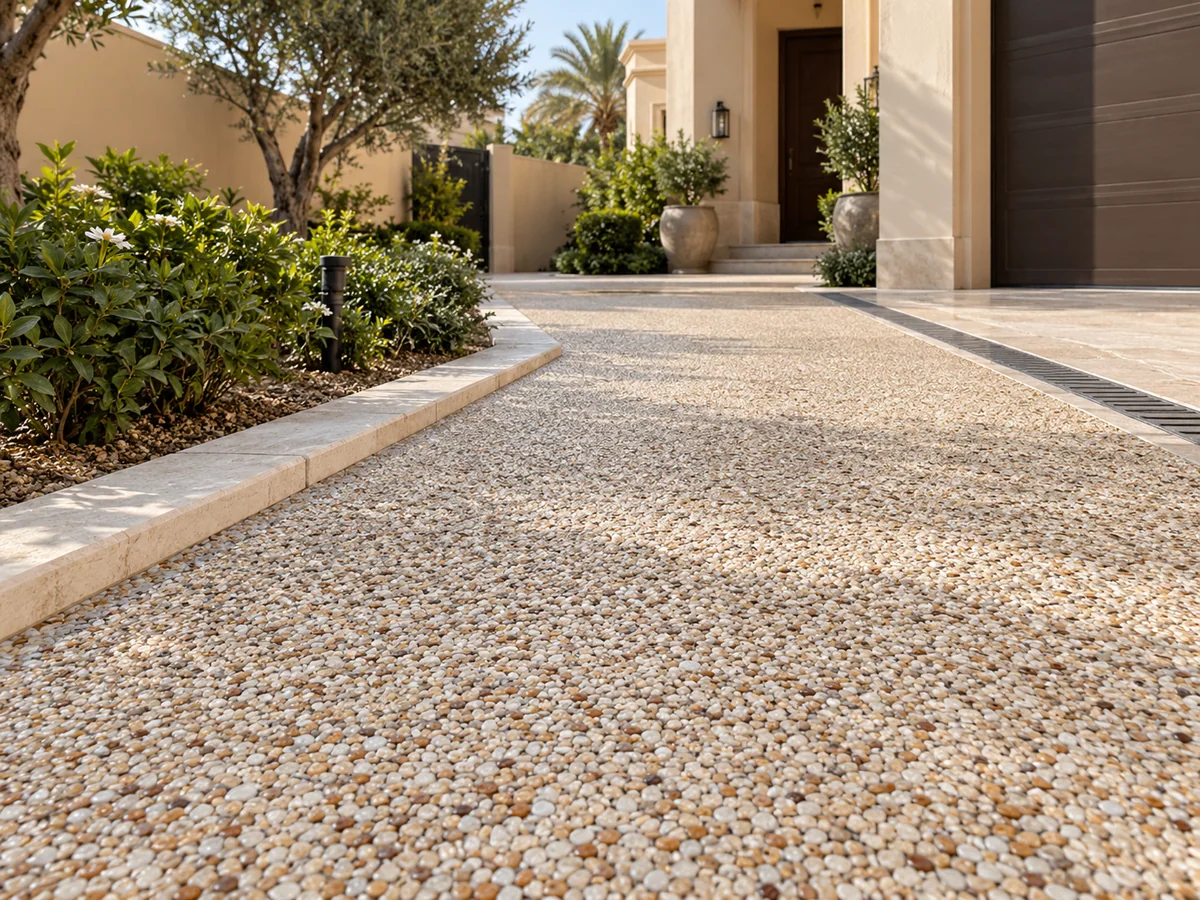
Resin-bound and resin-bonded surfacing are made differently. In a resin-bound system, the aggregate is mixed with resin before it is laid. With resin-bonded surfacing, aggregate is scattered over a layer of resin. Those two descriptions should not be used interchangeably in your specification.
If you are looking for resin-bound gravel in Dubai, establish which construction is being offered before choosing the stone blend. The questions below help turn a broad request for a resin surface into a discussion about the actual driveway, path or patio.
What does “bound” mean on the specification?
It should identify a mixed resin-and-aggregate system, together with the product information needed to install it. The manufacturer SureSet explains the difference between bound and bonded construction: resin-bound aggregate is mixed before application, while resin-bonded aggregate is broadcast onto resin already on the base.
Ask the proposed installer to name the system and explain its build-up. A photograph of loose gravel or an aggregate colour chart cannot show which installation method you will receive. Keep the system name with the selected sample so the appearance and construction remain connected.
DecoPaint's service page describes its resin-bound finish as a resin-and-aggregate surface for applications including driveways and patios. Discuss your proposed use with the team rather than treating every outdoor area as the same specification.
Does a permeable surface remove the need to plan drainage?
No. SureSet describes resin-bound surfacing as permeable and resin-bonded surfacing as impermeable. Water passing through a surface still needs somewhere to go beneath it. Have the project team assess the proposed base and drainage arrangement as a whole.
For an existing Dubai property, provide photographs of any places where water collects. Mark nearby irrigation and roof-water outlets on the plan. These are useful observations for the assessment; they do not establish what is happening below the current surface.
The outcome should be an agreed explanation of how water will leave the area, with responsibility assigned for any work outside the decorative surface package. A new aggregate finish should not be asked to conceal an unresolved drainage problem.
Can the same system serve a footpath and a driveway?
The installer needs to confirm suitability for the actual use. Tell the team whether vehicles will stand or turn on the surface, whether service equipment crosses it and where pedestrian routes meet the parking area. Include anything unusual, such as a regularly used delivery route.
Request the proposed system's requirements for that use, including its base and installed thickness. Avoid transferring a detail from a garden path to a driveway simply because the aggregate looks the same. The manufacturer and installer should settle those technical decisions for the project.
What should I check on the sample?
Look at the blend from normal standing distance, then inspect the surface closely. Compare it with the boundary wall or paving that will remain. For outdoor exposure, ask for the specified resin's information on UV stability and confirm that the product proposed for the job matches it.
Texture matters where the surface will be walked on. Explain whether the area is a dry entrance, a route from a pool or another setting with different conditions underfoot. Ask what evidence supports the selected system for that use; appearance alone cannot establish slip performance.
What belongs in the handover information?
Request cleaning instructions for the installed product and advice on keeping the surface functioning as intended. Agree how damage or a future repair would be assessed, and keep the mix reference with the handover records. A description such as “beige aggregate” will not be enough to identify the original blend later.
Once the system is settled, use DecoPaint's driveway edge-planning guide to review borders and adjoining surfaces. To start a site discussion, send the team the location, the intended use and photographs of the existing ground, including any standing-water areas.