
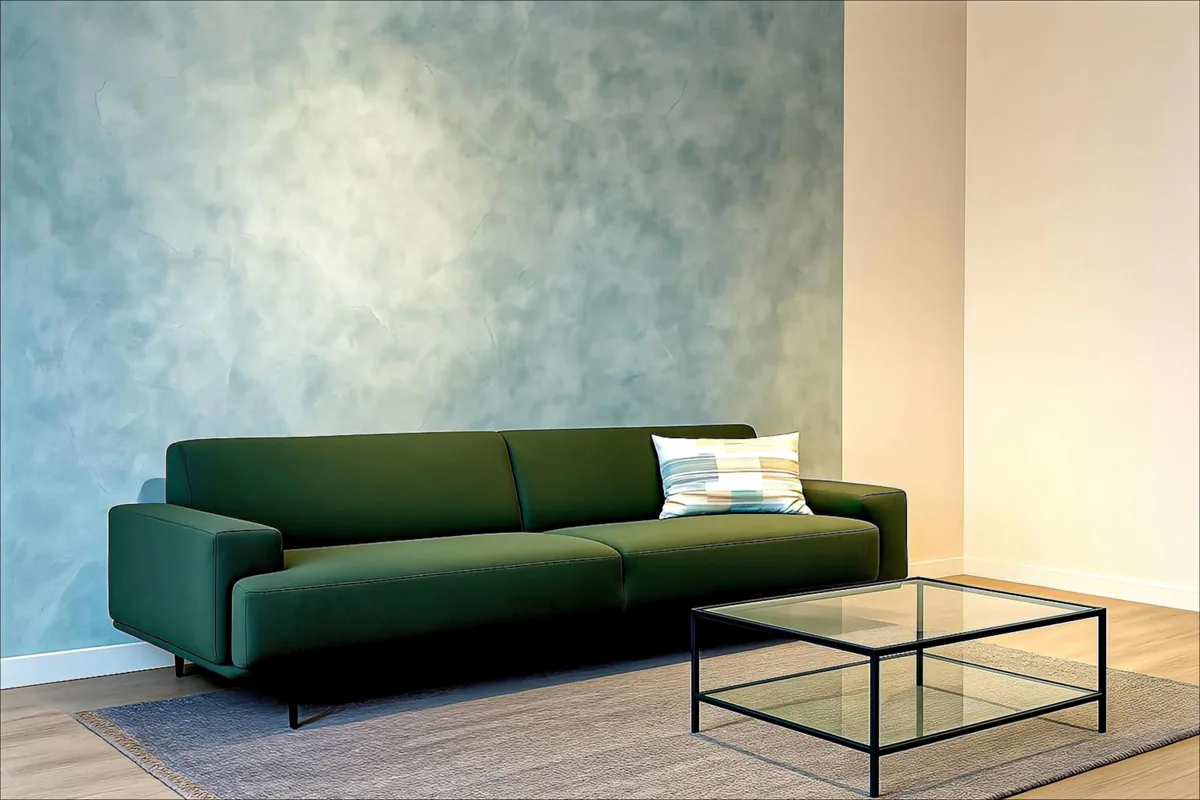
Approve a limewash sample upright at the intended wall, with the room’s daytime and evening lighting considered separately. Keep the same physical sample for both reviews. If the colour works beside the window but feels wrong under the lamps you use every night, leave the decision open until you have resolved that difference.
DecoPaint’s limewash finish has cloudy variation from overlapping brushwork. Its appearance is part colour and part visible movement. During approval, describe each separately so the applicator knows whether you want a different pigment direction or a quieter application.
Take the sample off the table
A board laid flat beneath a ceiling light gives you one view. Put it upright against the wall you intend to finish, then look from the sofa, bed or doorway where you will usually see it. Keep it in the same orientation when comparing candidates. Turning and moving every board between glances makes the comparison harder to follow.
Bring the actual adjacent materials into that view. Hold the curtain fabric beside the board and include the joinery or flooring reference where it meets the wall. If a material is still provisional, note it. You can accept a colour direction while leaving the final combination subject to that missing finish.
DecoPaint offers hand-finished A5 boards for sample reviews at your project. Use those to narrow the choice. Ask for a larger trial if the small board leaves you unable to judge the amount of brush movement across the proposed wall; agree its extent and preparation with the applicator.
Give daylight and the evening room their own review
Start with the blinds or curtains in the position you normally use during the day. Look at the board from the room’s usual viewing positions, including an angle across the surface. Note where the movement becomes more apparent and whether that is the effect you want.
Return after daylight has faded and switch on the fittings intended for ordinary use. A bedside lamp and a ceiling full of downlights are different room settings. Review the one you will live with, then any other setting that matters to you. Include dimming where the room design calls for it.
If the permanent fittings are missing, write down what was used for the review. Ask your designer or lighting supplier how closely it represents the final arrangement. Keep the lighting-dependent part of the approval open if it cannot yet be assessed. An electrician should handle fitting or control changes.
There is no need to choose a lamp specification from a generic limewash recommendation. Your lighting team can confirm the intended fittings; the sample review tests whether you like the finish under that particular arrangement.
Describe what needs changing before requesting another sample
“Too busy beside the headboard” is a different instruction from “too yellow under the bedside lamps”. Tell the applicator where you saw the problem and which lights were on. Ask which adjustment they propose, then assess the revision in the same position and conditions.
Change one decision at a time where possible. If the pigment, application character and lighting all change together, it becomes difficult to tell which revision answered the concern. Keep the previous board labelled until the comparison is complete.
For a broader question about whether the wall suits limewash at all, use the existing limewash feature-wall guide. Colour approval leaves the substrate assessment and suitability decisions with the applicator. A liked sample does not resolve an unsuitable wall.
Leave a usable instruction with the sample
Give the accepted board an identifier and record the room and wall it applies to. Add the colour reference, the agreed description of brush movement and the lighting settings used for acceptance. Date the decision and name the person approving it. Identify any checks still pending before the full wall proceeds.
Keep the physical board protected and available for comparison. Use photographs to record its position and the room setting, with the sample identifier visible in your notes. Avoid making a phone image the sole reference for colour acceptance.
If the light fittings or adjoining finishes change later, ask which parts of the decision need reviewing. Send DecoPaint the wall photograph, the main material references and your usual lighting settings when arranging the sample session. Include an evening review if that is when you use the room most.